● In short
- A fractional CTO is a senior engineering leader for a few days a month, accountable for decisions – not a consultant who leaves a report.
- It fits when the company needs judgment more than hours: architecture, team, vendors, AI.
- Measure it like any role: delivery speed, incidents, spend, and hires that stay.
Before founding Impulse in 2022, I was VP of Engineering at Tappa. Since then our studio has delivered 97 projects, and in many of them the hardest problem wasn't the model or the code. It was that nobody on the client's side owned the technical decisions. The founder was making them between sales calls, an agency was making them by default, or a strong senior developer was making them without the context of the business.
A fractional CTO closes that gap without a full-time executive salary on the payroll.
What a fractional CTO actually does
A fractional CTO is a senior engineering leader who works with you part-time – typically a few days a month – and is accountable for the technical side of the business. Not a consultant who writes a report and leaves, and not an extra pair of hands on the backlog. The job is the same as a full-time CTO's, scaled to what the company needs right now:
- Architecture: what to build, what to buy and what to stop maintaining.
- Team: who to hire, in what order, and how work moves from idea to production.
- Vendors and agencies: what you're paying for, and whether you'd notice if it stopped.
- Delivery: a roadmap that leaves real capacity for the things nobody planned.
- AI: separating what pays back from what only demos well.
When it makes sense
These are the signals I see most often:
- A non-technical founder is making technical decisions. Every choice of stack, vendor or hire is made on trust, and the founder knows it.
- The product was built by an agency and now needs to come in-house – or the agency relationship needs someone who can read both the invoices and the code.
- The team grew and shipping slowed down. More developers, more meetings, fewer releases.
- AI is on the board agenda and nobody can say which projects will pay back.
- A fundraise or an acquisition is coming, and someone is going to run technical due diligence.
When it doesn't
Fractional is not always the answer. If the core of your product is deep technology that needs someone building it fifty hours a week, you need a full-time technical co-founder. If there is no team and no budget to build one, a fractional CTO will end up writing code all day, and you'd be better off hiring a strong engineer. The format works when the company needs judgment more than hours.
The question isn't how many hours you buy. It's who owns the technical decisions.
The first 90 days
Every engagement follows roughly the same shape:
- Weeks 1–2: look under the hood. Architecture, code, infrastructure, costs, security, how the team actually works and what has been promised to customers. The output is a short written assessment with the three or four things that matter most.
- Weeks 3–6: decide. A roadmap with explicit capacity for the unplanned, a hiring plan, decisions on vendors and on what to stop doing. Where AI fits, a pilot with stop criteria agreed up front.
- After that: a rhythm. A weekly session with the founder, reviews of the changes that matter, interviews for key hires and a short monthly report with numbers.
Why more developers often ship less
Teams that double in size and get slower are one of the most common things I'm asked to look at. Each new person adds coordination, every unclear boundary in the code turns into a meeting, and ownership gets spread so thin that nobody can say no. Complexity itself isn't the problem – hidden complexity is, the kind that leaks from the code into everyone's calendar.
Fixing it rarely means hiring more. It means clear ownership of each part of the system, small teams that can release on their own, and paying down the complexity that slows every change.
AI without the hype
Today most of my conversations start with AI. The hard part is rarely the model. It's choosing the right process, putting the data and knowledge in order, and making the result traceable. If you can't trace an output back to the exact steps the system took, you don't have a metric yet – you have a story.
The same discipline applies to AI agents working on the codebase itself. Their context should live in the repository, be reviewed like code and have owners. Otherwise agents repeat old decisions with full confidence. We wrote more about choosing where AI pays back and getting pilots into production.
How to tell it's working
- Time from idea to production goes down, and releases become boring.
- There are fewer incidents, and the ones that happen are understood.
- Cloud and vendor spend is known – and usually lower.
- Key hires stay and grow.
- The founder spends less time on technical decisions and more on the business.
Is it the right moment?
If you're asking whether you need a full-time CTO yet, that's usually when a fractional one helps most: early enough to set up the architecture and the team properly, before the codebase starts making decisions for you. The first conversation comes without a sales pitch, and I'll tell you honestly if the format doesn't fit
Case · EdTech · LLM
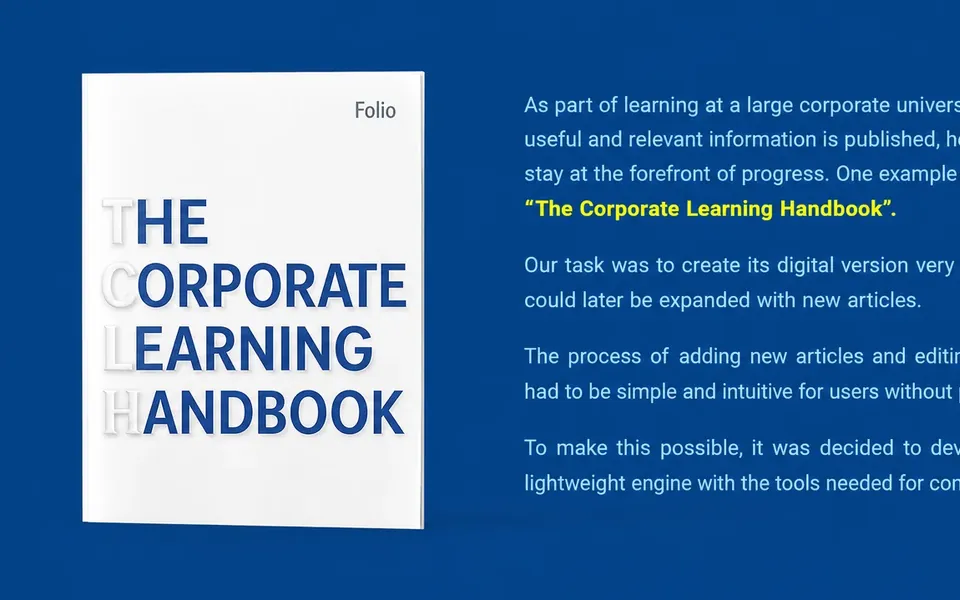
Folio
An adaptive AI editor for learning content. Built and launched in six weeks